
Protein Labeling Reagents

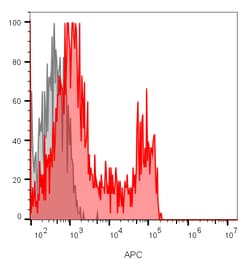
Biotium CD8(RIV11), CF488A conjugate, 0.1mg/mL
Recognizes a protein of 32 kDa, identified as CD8a (also known as CD8 chain, T cell co-receptor, Leu2, and T8). CD8 molecule consists of two chains, termed and chain, which are expressed as a disulphide-linked heterodimer or as an homodimer. CD8 is expressed on T cell subset (cytotoxic/suppressor T cells), thymocytes and NK cells. The majority of CD8 T-cells expresses CD8 as heterodimer. Some subpopulation of CD8 T cells as well as NK cells may express homodimer. CD8 functions as a co-receptor in concert with TCR for binding the MHC class I/peptide complex. The HIV-2 envelope glycoprotein binds CD8 chain (but not chain). The cytoplasmic domain of CD8 associates with p56lck tyrosine kinase.Primary antibodies are available purified, or with a selection of fluorescent CF Dyes and other labels. CF Dyes offer exceptional brightness and photostability. Note: Conjugates of blue fluorescent dyes like CF405S and CF405M are not recommended for detecting low abundance targets,


Biotium CD33(C33/68), CF488A conjugate, 0.1mg/mL
Recognizes a 67 kDa glycoprotein, which is identified as CD33. It is a transmembrane protein of the sialic acid-binding immunoglobulin-like lectin (Siglec) family. It belongs to the immunoreceptor tyrosine-based inhibitory motif (ITIM)-containing molecules able of recruiting protein tyrosine phosphatases SHP-1 and SHP-2 to signal assemblies; these ITIMs are also used for ubiquitin-mediated removal of the receptor from the cell surface. CD33 is expressed on cells of myelomonocytic lineage, binds sialic acid residues in N- and O-glycans on cell surfaces, and is a therapeutic target for acute myeloid leukemia. CD33 is expressed on myeloid progenitors, monocytes, granulocytes, dendritic cells and mast cells. It is absent on platelets, lymphocytes, erythrocytes and hematopoietic stem cells.Primary antibodies are available purified, or with a selection of fluorescent CF Dyes and other labels. CF Dyes offer exceptional brightness and photostability. Note: Conjugates of blue fluor

Medchemexpress LLC 2,5-dioxopyrrolidin-1-yl 1-(4-(tetrazin-3-yl)phenyl)-3,19-dioxo-PEG4-SS-oate | 95.0% | 723.82 | C30H41N7O10S2 | 10 MG

Tetrazine-PEG4-SS-NHS is a cleavable PEG4-based heterobifunctional linker containing a tetrazine reactive group, an NHS ester for amine coupling, and a disulfide cleavable bond for release. It is designed for bioconjugation and antibody-drug conjugate synthesis, enabling rapid click conjugation and controlled intracellular release.
- Cleavable disulfide linkage for intracellular release.
- Tetrazine group enables rapid iEDDA click conjugation with trans-cyclooctene reagents.
- NHS ester enables efficient coupling to primary amines.
- PEG4 spacer improves solubility and reduces steric hindrance.
- Available in small milligram quantities for research use.
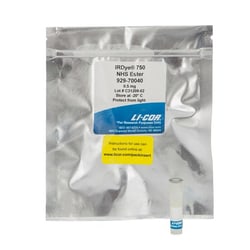
LICOR IRDye 750 NHS Ester (0.5mg)
IRDye 750 NHS Ester is an infrared dye with detection near 750 nm. The NHS ester reactive group provides the functionality for labeling primary and secondary amines, such as lysine residues in proteins. This dye is not suitable for use with LI-COR Odyssey Imaging Systems.
Biotium CD86(BU63), CF568 conjugate, 0.1mg/mL
Recognizes a protein of 70 kDa, which is identified as CD86. CD86, along with CD80/B71, is an important accessory molecule in T cell co-stimulation via its interaction with CD28 and CD152/CTLA4, a cancer immunotherapy target. It is a type I transmembrane glycoprotein and a member of the immunoglobulin superfamily of cell surface receptors. It is expressed at high levels on resting peripheral monocytes and dendritic cells and at very low density on resting B and T lymphocytes. CD86 expression is rapidly upregulated by B cell specific stimuli with peak expression at 18 to 42 hours after stimulation. Since CD86 has rapid kinetics of induction, it is believed to be the major CD28 ligand expressed early in the immune response. It is also found on malignant Hodgkin and Reed Sternberg (HRS) cells in Hodgkin's disease.Primary antibodies are available purified, or with a selection of fluorescent CF Dyes and other labels. CF Dyes offer exceptional brightness and photostability. N
Biotium CD13(WM15), CF488A conjugate, 0.1mg/mL
Recognizes an integral membrane glycoprotein of 150 kDa, identified as CD13 (also known as aminopeptidase-N). The antibody recognizes an extracellular epitope. The CD13 antigen is present on most cells of myeloid origin including granulocytes, monocytes, mast cells, and GM-progenitor cells. It is also expressed by the majority of AML, CML in myeloid blast crisis, and in a smaller fraction of lymphoid leukemias. CD13 is absent from normal lymphocytes, platelets and erythrocytes. CD13 is also present on fibroblasts; endothelial cells, epithelial cells from renal proximal tubules and intestinal brush border, bone marrow stromal cells, osteoclasts, and cells lining bile duct canaliculi. CD13 is identical to aminopeptidase N (APN), a prominent membrane-bound metalloprotease present on the surface of intestinal brush border and renal tubules. CD13 plays a role in metabolism of biologically active peptides, in phagocytosis, and in bactericidal/tumoricidal activities. It also serves
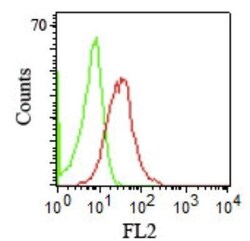
Biotium CD1b(RIV12), CF488A conjugate, 0.1mg/mL
The mouse monoclonal antibody recognizes CD1b, a 44 kDa type I glycoprotein associated with beta2-microglobulin. It is expressed on dendritic cells, Langerhans cells, thymocytes, and T acute lymphoblastic leukemia cells. The CD1 multigene family encodes five forms of the CD1 T-cell surface glycoprotein in human, designated CD1A, 1B, 1C, 1D and 1E. CD1, a type 1 membrane protein, has structural similarity to the MHC class I antigen and has been shown to present lipid antigens for recognition by T lymphocytes. Constitutive endocytosis of CD1B molecules and the differential sorting of MHC class II from lysosomes separate peptide- and lipid antigen-presenting molecules during dendritic cell maturation. CD1B is also expressed in interdigitating cells.Primary antibodies are available purified, or with a selection of fluorescent CF Dyes and other labels. CF Dyes offer exceptional brightness and photostability. Note: Conjugates of blue fluorescent dyes like CF405S and CF405M are
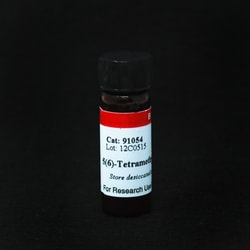
Biotium 5(6)-Tetramethylrhodamine Maleimide
5(6)-Carboxytetramethylrhodamine maleimide has C6-linker that enhances the fluorescence after the dye is conjugated to proteins. The product is a direct replacement for 5(6)-carboxytetramethylrhodamine C5-maleimide (91040).Properties: Ex/Em (MeOH) = 540/565 nm; Red solid soluble in DMF or DMSO; Store at -20°C and protect from light, especially in solution; C35H36N4O6; MW: 608.66.
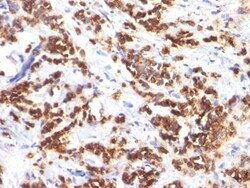
Biotium Milk Fat Globulin(MFG-06), CF488A conjugate, 0.1mg/mL
Recognizes a protein of 40-45 kDa, identified as human milk fat globule membrane protein (HMFG). HMFG is present on normal human breast epithelial cells and cell lines derived from breast carcinomas, as well as to the outer surface of the human milk fat globule. HMFG is considered as a differentiation marker. It is useful as specific breast epithelial marker and can also provide a tool to study the role of the cell surface in normal and neoplastic mammary development.Primary antibodies are available purified, or with a selection of fluorescent CF Dyes and other labels. CF Dyes offer exceptional brightness and photostability. Note: Conjugates of blue fluorescent dyes like CF405S and CF405M are not recommended for detecting low abundance targets, because blue dyes have lower fluorescence and can give higher non-specific background than other dye colors.
Biotium CD3e (T-Cell Marker)(OKT3), CF568 conjugate, 0.1mg/mL
Recognizes the epsilon-chain of CD3, which consists of five different polypeptide chains (designated as gamma, delta, epsilon, zeta, and eta) with MW ranging from 16-28 kDa. CD3, also known as T3, is a member of the immunoglobulin superfamily that plays a role in antigen recognition, signal transduction, and T cell activation. It is found on all mature T-lymphocytes, NK, T-cells, and some thymocytes, and is expressed, typically at high levels, on peripheral T cells and majority of T cell neoplasms. Thymocytes express CD3 at different level on the cell surface in the course of differentiation and CD3 is predominantly intracytoplasmic in cortical thymus.Anti-CD3 clone OKT3 has been reported to have potent immunosuppressive properties in vivo and has been proven effective in the treatment of renal, heart and liver allograft rejection. In the crystal structure of the antibody-receptor complex, clone OKT3 was found to bind a conformational epitope on CD3e dominated by a linear
Biotium Cytokeratin, LMW(AE-1), CF568 conjugate, 0.1mg/mL
This MAb recognizes the 56.5 kDa (CK10); 50 kDa (CK14); 50 kDa (CK15); 48 kDa (CK16); 40 kDa (CK19) keratins of the acidic (Type I or LMW) subfamily. Twenty human keratins are resolved with two-dimensional gel electrophoresis into acidic (pI 6.0) subfamilies. The acidic keratins have molecular weights (MW) of 56.5, 55, 51, 50, 50', 48, 46, 45, and 40 kDa. MAb AE3 recognizes the 65-67, 64, 59, 58, 56, and 52 kDa keratins of basic subfamily. Many studies have shown the usefulness of keratins as markers in cancer research and tumor diagnosis. AE1/AE3 is a broad spectrum anti pan-keratin antibody cocktail, which differentiates epithelial tumors from non-epithelial tumors e.g. squamous vs. adenocarcinoma of the lung, liver carcinoma, breast cancer, and esophageal cancer.Primary antibodies are available purified, or with a selection of fluorescent CF Dyes and other labels. CF Dyes offer exceptional brightness and photostability. Note: Conjugates of blue fluorescent dyes like CF
Aat Bioquest Cyanine 5 azide [equivalent to Cy5® azide]
A variety of cyanine 5 ( Cy5®) dyes has been used to label biological molecules for fluorescence imaging and other fluorescence-based biochemical analysis. They are widely used for labeling peptides, proteins and oligos etc.

Biotium CF570 Succinimidyl Ester
CF Dye Succinimidyl Esters (SE, also known as NHS esters) are amine-reactive fluorescent dyes. SE dyes are commonly used to label antibodies and other proteins on free amine groups, such as lysine residues. CF dyes are Biotium's line of next-generation fluorescent dyes with advantages in brightness, photostability, and conjugate specificity compared to other fluorescent dyes. Red fluorescent CF570 dye has excitation/emission at 568/591 nm.
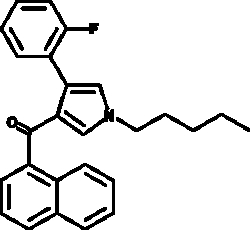
Cayman Chemical JWH 307 3-Isomer 1mg
An isomer of JWH 307 which differs by having the fluorophenyl group at the 3' position, rather than the 2' position, of the pyrrole group; intended for forensic and research purposes
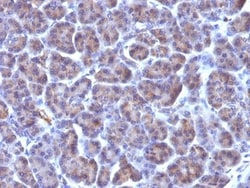
Biotium CMV-p65(CMV100), CF488A conjugate, 0.1mg/mL
Ten to forty percent of the patients with acquired immunodeficiency syndrome (AIDS) develop cytomegalovirus (CMV) infections. In some patients with AIDS, CMV is detected in the bronchoalveolar lavage fluid (BALF), urine, and other specimens, even when there are no symptoms of CMV disease. An indicator of active CMV infection is needed to facilitate the diagnosis of CMV disease in patients with AIDS or HIV infection. CMV p65 antigen was detected in the leukocytes of both the peripheral blood and BALF during the early phase of CMV disease.Primary antibodies are available purified, or with a selection of fluorescent CF Dyes and other labels. CF Dyes offer exceptional brightness and photostability. Note: Conjugates of blue fluorescent dyes like CF405S and CF405M are not recommended for detecting low abundance targets, because blue dyes have lower fluorescence and can give higher non-specific background than other dye colors.